Dr. R.G.S. Vara Prasad: The Scientist’s Precision, The Innovator’s Vision, and a Mission to Improve Drug Delivery
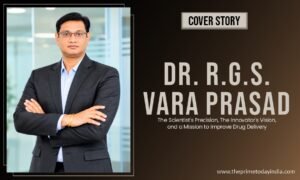
How a Pharmaceutical Scientist is Turning Complex Research into Smarter Drug Delivery Systems and Practical Healthcare Solutions.
A medicine may contain the right active ingredient, yet its benefits can remain limited when the body struggles to absorb it, the formulation loses stability or the dosage form makes treatment difficult for patients. These challenges sit at the heart of pharmaceutical research and development, where scientific discoveries must prove their value through safety, quality, affordability and practical use.
Dr R.G.S. Vara Prasad, a pharmaceutical scientist with more than two decades of experience, has built his career around finding better ways to deliver medicines. His work spans conventional formulations, nanotechnology, biomaterials, regenerative medicine, ophthalmic preparations and oral thin films, bringing together scientific curiosity and practical healthcare needs.
Through formulation development, advanced drug delivery research, publications and a patent portfolio spanning 20 entries, he has explored how materials and technology can improve the way medicines perform. His guiding principle remains clear: pharmaceutical innovation matters most when it makes treatment more effective, convenient and accessible for patients.
“Meaningful pharmaceutical innovation is not defined merely by scientific novelty, but by its ability to improve therapeutic delivery, enhance patient convenience and create accessible healthcare solutions.”
A Career Shaped by a Fundamental Question
Dr. Prasad’s journey into pharmaceutical R&D began with a fundamental question: How can we make existing medicines work better for patients?
Early in his scientific journey, he became interested in the challenges associated with poor drug solubility, limited bioavailability, formulation instability and difficulties in drug administration. He recognised that the therapeutic potential of an active ingredient could be significantly influenced by its formulation and delivery system.
This understanding encouraged him to pursue pharmaceutical research as a way of connecting scientific knowledge with practical therapeutic improvements. His initial objective was to develop effective drug delivery systems that could overcome the limitations of conventional formulations.
As his experience expanded, he began to appreciate that innovation also needed to account for patient convenience, product quality, manufacturing feasibility and affordability. These considerations remain central to his approach to pharmaceutical development.
Throughout his career, he has focused on translating scientific research into practical healthcare solutions while maintaining high standards of quality, safety and regulatory compliance. His contributions include scientific publications, invited book chapters and a portfolio listing 20 patent entries across diverse pharmaceutical technologies.
For Dr. Prasad, meaningful pharmaceutical innovation is defined by its ability to improve therapeutic delivery, enhance patient convenience and create accessible healthcare solutions.
Connecting Materials Science with Drug Delivery
Dr. Prasad’s interest in pharmaceutical development extends across several scientific disciplines, connected by a common objective: understanding how pharmaceutical materials and delivery technologies can improve therapeutic outcomes.
His research involving conducting polymers, electrospun nanofibres, controlled-release systems and regenerative biomaterials encouraged him to explore interdisciplinary approaches. Whether working with nanoparticles, polymeric matrices, tissue-engineering scaffolds or specialised formulations, he has focused on improving the interaction between therapeutic agents and biological systems.
His research involving nanoparticles and thermosensitive gels demonstrated how material properties could be designed to influence drug release and biological performance. Such work reinforced his view that conventional formulation approaches cannot address every pharmaceutical challenge.
Published research involving polyethyleneimine-simvastatin acid nanoparticles and conducting matrices explored controlled release and osteogenic potential. Working with these advanced systems requires careful attention to material compatibility, drug release characteristics and intended biological functions. A scientifically promising concept must also demonstrate reproducibility and suitable performance under experimental conditions.
These experiences strengthened Dr. Prasad’s appreciation of the value of interdisciplinary research. Scientific progress often emerges when researchers connect knowledge from different fields and apply it to problems that conventional methods may struggle to solve.
His interest in oral thin-film technologies follows the same principle. By applying material science and formulation engineering to a more convenient dosage form, he has explored another way to address the practical challenges patients face when taking medicines.
What Research Teaches Beyond the Laboratory
Some of the most important lessons in pharmaceutical R&D emerge when experiments produce unexpected results. Formulations may behave differently from initial predictions, revealing challenges involving material compatibility, drug release, processing conditions or analytical assumptions.
Dr. Prasad’s work on polymer-based controlled drug delivery systems for biomedical and tissue-engineering applications has reinforced the importance of systematic experimental design, material characterisation and interdisciplinary collaboration.
A scientifically promising formulation must demonstrate reproducible results under appropriate experimental conditions. Research therefore requires a willingness to examine evidence objectively, including findings that challenge the original hypothesis.
For Dr. Prasad, experiments should guide scientific decisions rather than serve as a means of proving an assumption correct. Unexpected outcomes can reveal problems that require further investigation, encourage a change in direction or help researchers understand why a particular approach may be unsuitable.
His approach to problem-solving begins with identifying the reason a formulation is failing to perform as expected. Systematic investigations, experimental design and reproducibility assessments provide the evidence needed to decide what should happen next.
A project may warrant continued development when there is a clear technical pathway, meaningful therapeutic potential and reasonable feasibility. Redesign becomes appropriate when the evidence points towards fundamental changes, while discontinuation may be necessary when scientific limitations or safety, regulatory and commercial challenges outweigh the expected benefits.
Persistence remains important in innovation, but Dr. Prasad places equal value on objective judgement. Practical research has taught him adaptability, patience and critical thinking in ways that theoretical learning alone cannot.
“Practical research teaches adaptability, patience and critical thinking in ways that theoretical learning alone cannot.”
Understanding What Makes a Good Pharmaceutical Solution
During his early research years, Dr. Prasad primarily assessed innovation through scientific parameters such as dissolution, stability, formulation performance and technological novelty. These measures helped him understand how a formulation behaved and whether it could deliver the intended results.
With increasing industrial experience, his perspective evolved considerably. His involvement in formulation optimisation, analytical development, stability studies, regulatory documentation and manufacturing technology transfer demonstrated that even an excellent laboratory formulation has limited value unless it can be manufactured consistently, meet regulatory requirements and deliver meaningful benefits to patients.
These experiences showed him that scientific feasibility and commercial practicality must develop together. A formulation that performs well in a laboratory must also prove reliable under manufacturing conditions, maintain its quality over time and offer practical value to the people who use it.
Today, Dr. Prasad defines a good pharmaceutical solution through a combination of therapeutic performance, patient acceptability, reproducible quality, regulatory compliance and economic viability.
He also recognises that innovation does not always require an entirely new technology. Improving an existing medicine’s stability, convenience or accessibility can create equally significant healthcare value. This understanding has remained relevant throughout his work across different pharmaceutical technologies, where the aim is to solve a genuine problem rather than pursue novelty for its own sake.
Making Oral Thin Films More Patient-Friendly
Oral thin films offer considerable potential for patients who experience difficulty swallowing conventional dosage forms, particularly children and older adults. They also provide opportunities to make medicine administration more convenient for other patient groups.
However, developing a successful oral film requires much more than incorporating an active ingredient into a polymer matrix. Several formulation and manufacturing considerations determine whether the finished product will perform as intended.
Drug loading, polymer compatibility, mechanical strength, content uniformity, taste masking, disintegration behaviour and stability all require careful attention. Taste masking becomes especially important when formulations contain bitter active ingredients. Moisture sensitivity, packaging requirements and consistent film thickness can create further challenges during development and production.
Dr. Prasad’s patent portfolio includes oral-film technologies involving paracetamol, ketorolac, calcium supplements, L-methylfolate and other formulations, demonstrating the versatility of this delivery platform.
He sees a need for the industry to concentrate on robust manufacturing processes, validated quality controls, appropriate regulatory strategies and meaningful patient-acceptance studies. These considerations help establish whether a formulation can provide genuine therapeutic and practical advantages over existing dosage forms.
The long-term success of oral thin films will depend on how reliably they can be manufactured, how well they perform and whether patients find them suitable for everyday use. Convenience must go hand in hand with dependable quality and appropriate therapeutic performance.
“The technology’s long-term success will depend on developing formulations that offer genuine therapeutic and practical advantages over existing dosage forms.”
Bridging the Gap Between Research and Commercialisation
One of the biggest challenges in pharmaceutical development is converting a successful laboratory formulation into a product that can be manufactured consistently, meet regulatory requirements and remain economically viable.
Laboratory development offers flexibility, whereas commercial manufacturing requires controlled processes, validated methods, consistent raw materials and reliable equipment performance. Scale-up can introduce unexpected variations in product quality, processing behaviour and stability.
Dr. Prasad has found that even a promising formulation can encounter difficulties when production volumes increase. A product must therefore be evaluated with manufacturing conditions and long-term performance in mind from the earliest stages of development.
His approach involves integrating manufacturing, analytical and regulatory considerations into formulation development. Design of experiments, risk assessments, stability evaluations and systematic process optimisation help identify potential difficulties before technology transfer.
Coordination between formulation scientists, analytical teams, quality assurance, regulatory specialists and manufacturing personnel is equally important. Each group contributes knowledge that helps identify risks, establish suitable controls and prepare the product for commercial production.
Another consideration is whether an advanced formulation offers sufficient value to justify its development and manufacturing costs. Scientific promise alone cannot guarantee commercial viability.
For Dr. Prasad, successful commercialisation begins during formulation development, rather than after laboratory work has been completed. Scientific feasibility, manufacturing practicality, regulatory readiness and economic considerations must progress together if a product is to reach patients successfully.
“I believe successful commercialization begins during formulation development, not after the laboratory work is completed.”
Turning Scientific Collaboration into Results
Pharmaceutical R&D rarely succeeds through the work of one scientist alone. Product development requires coordination among contract manufacturing organisations, external partners, regulatory teams, production groups and other collaborators.
Dr. Prasad considers shared objectives, technical competence, transparency and accountability essential to productive scientific partnerships. Effective collaboration requires clearly defined responsibilities, realistic timelines, measurable deliverables and open communication.
When challenges arise, partners must discuss them early and work towards scientifically justified solutions. In external manufacturing and development relationships, technical capability, quality systems and regulatory understanding are particularly important.
His experience has reinforced the value of involving different functions from the beginning of a project. Rather than bringing departments into the process only when problems emerge, R&D leaders should encourage cross-functional participation throughout development.
This approach helps teams identify risks early, improve coordination and make informed decisions. It also supports technology transfer and the consistent execution of development milestones.
For Dr. Prasad, a productive partnership is measured by its contribution to product quality, development efficiency and successful execution. Collaboration works best when every participant understands the shared objectives and takes responsibility for achieving them.
Balancing Scientific Curiosity with Business Decisions
As Dr. Prasad takes on broader product-development responsibilities, his work requires a balance between the curiosity that drives research and the practical demands of business leadership.
Scientific exploration creates opportunities for discovery, while commercial responsibilities require careful decisions about budgets, timelines, outsourcing, regulatory expectations and product development priorities.
His approach involves evaluating research opportunities according to unmet healthcare needs, technical feasibility, regulatory requirements and potential commercial value. Clearly defined milestones and regular technical reviews help maintain progress while protecting scientific rigour.
Outsourcing decisions also require attention to technical capability, quality standards and the ability to achieve agreed development objectives.
Financial discipline remains important, but it must never come at the expense of patient safety, product quality or regulatory compliance. Dr. Prasad aims to encourage scientific creativity within a practical framework that supports responsible product development.
For him, sustainable innovation requires both scientific ambition and careful execution. Researchers need the freedom to explore ideas, alongside a clear understanding of the technical, regulatory and commercial requirements that determine whether those ideas can become viable healthcare products.
“Persistence is important in innovation, but it must remain guided by evidence.”
Preparing Young Scientists for the Future
Dr. Prasad encourages young pharmaceutical scientists to build strong scientific fundamentals while developing an understanding of the entire pharmaceutical product lifecycle.
Technical expertise is essential, but successful innovation also requires knowledge of analytical development, manufacturing, regulatory affairs, quality systems and commercialisation. Communication, collaboration and project-management skills are equally important for professionals working across these disciplines.
He advises young researchers to remain curious, question assumptions and approach experimental challenges systematically. A strong scientific career requires the ability to investigate problems, assess evidence and learn from unexpected results.
Looking towards the next decade, he expects advanced drug delivery technologies, personalised therapeutic approaches, patient-friendly dosage forms and efficient manufacturing platforms to become increasingly important. Digital technologies and data-driven development are also likely to influence pharmaceutical research.
These developments will create opportunities for scientists who can combine technical knowledge with an understanding of real healthcare needs. However, scientific judgement, ethical responsibility and patient considerations must remain central to innovation.
Dr. Prasad encourages the next generation to pursue research that addresses genuine healthcare challenges rather than focusing solely on technological novelty. The ultimate aim is to transform scientific knowledge into solutions that make a meaningful difference to patients.
“A meaningful scientific career is defined by the ability to transform knowledge into healthcare solutions that improve patients’ lives.”
Measuring Innovation by Its Impact
Across more than two decades in pharmaceutical research and development, Dr. Prasad has worked across conventional formulations, advanced drug delivery systems, nanotechnology, biomaterials, regenerative medicine and oral thin-film technologies. His scientific publications, invited book chapters and patent portfolio reflect his continued engagement with complex pharmaceutical challenges.
Yet a consistent principle connects these areas of work: scientific discovery must translate into practical value. A formulation needs reliable evidence, reproducible quality, suitable manufacturing processes and a clear understanding of patient needs.
Whether investigating a polymer matrix, addressing a scale-up challenge or developing a more convenient dosage form, Dr. Prasad returns to the question that first drew him towards pharmaceutical research: how can existing medicines work better for patients?
The industry continues to face challenges involving drug delivery, stability, manufacturing costs, regulatory expectations and patient acceptance. Addressing these concerns requires researchers who can combine scientific knowledge with practical judgement, collaboration and a willingness to question established approaches.
For Dr. Prasad, pharmaceutical innovation remains a continuous process of learning, experimentation and purposeful development. Its real value lies in turning scientific possibilities into dependable healthcare solutions that improve therapeutic delivery, make treatment more convenient and help create more accessible care for patients.