Rajesh Kumar: Building a Future-Ready Audit Path
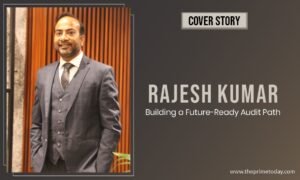
Designing audit solutions that support stronger growth and corporate governance!
The global audit industry is large and expanding. In 2025, its services are valued in the billions of dollars and expected to keep growing steadily over the next decade. Demand rises because companies, investors, regulators, and the public all want clear, reliable information about how money flows and risk is managed. At the same time, technology such as artificial intelligence and data analytics is changing how audits are done, helping auditors find deeper insights and manage risk with greater speed.
Rajesh Kumar sees these shifts as more than background noise. He sees them as a call to action. He built his career around helping organizations navigate the complexity of finance, risk, and compliance. Today, he leads TRPW Strategic Partners, an organization that emerged from traditional audit and advisory roots and now blends disciplined audit thinking with practical technology solutions that help teams adapt to the demands of the modern business world.
Rajesh Kumar learned his craft inside some of the most challenging global environments. He qualified as a Chartered Accountant and completed postgraduate study in Strategic Finance and Control, adding global leadership training through Harvard Business School. Before TRPW, he spent close to seventeen years in senior roles across various industries and companies such as Johnson & Johnson, Stryker Global, and Biotronik in Southeast Asia and beyond. These roles deepened his appreciation for how finance, risk, and strategy intersect in real organizations.
That experience formed the way he thinks about audit today. For him, an audit is about creating clarity in business, uncovering risks early, and helping leaders make decisions with confidence. Rajesh Kumar focuses on bringing tech and human insight together so teams can work with data that is cleaner, more timely, and more useful.
Clients respond to this blend of experience and practical thinking. They see Rajesh Kumar as someone who understands the pressure points of risk and compliance, and yet keeps a calm focus on what matters most for growth and resilience. In an industry that must balance strict standards with rapid change, leaders like Rajesh Kumar help organizations turn audit from a requirement into a resource that strengthens performance and builds trust.
Let us learn more about his journey:
A Career Built Inside Rigor — And Then Beyond It
For the first 17 years of his career, Rajesh Kumar navigated leadership roles across finance, accounting and audit in corporate organizations where structure was neither optional nor flexible. Reporting cycles governed attention. Compliance sets boundaries. The stakes were high, and the expectations were sharper than the deadlines themselves.
He learned how to deliver under pressure. He learned how to translate complexity into order. And he learned how decisions ripple across organizations, whether leaders recognize those patterns or not.
But he also noticed something else.
Finance was often positioned like a checkpoint rather than a partner. Critical business decisions moved forward while finance followed, auditing what had already occurred instead of shaping what could happen next. That distance, in his view, created missed opportunities. When finance thinks strategically, it builds trust faster, anticipates risk earlier, and creates alignment where organisations usually rely only on structure.
That realization did not produce an instant pivot. It produced curiosity. And over time, curiosity grew into intent.
He wanted to lead something of his own. Not to run a company simply for the sake of entrepreneurship. But to create an organization capable of rethinking how finance, audit and leadership could work together.
Founding TRPW Strategic Partners
7 years ago, Rajesh Kumar co-founded TRPW Strategic Partners with a vision that was both clear and unconventional for the field. His co-founder, Shilpi came from a deep technology background, with an MBA in IT, an MCA, and additional advanced IT qualifications. It was not an accidental pairing. The company was deliberately built at the intersection of finance and audit expertise and technology-driven capability.
From the outset, TRPW was not imagined as a traditional audit and accounting firm. It was designed as an organization that could evolve. An organization that could consult, advise, and eventually innovate in ways that reshaped the very tools finance and audit teams use to work.
The first year moved cautiously, as almost all young organizations do. The second year grew tenfold, a signal that their approach did not just resonate. It worked.
As new engagements arrived, TRPW expanded into internal audits, virtual CFO roles, financial process consulting, and accounting solutions, layering technology into operations wherever it could strengthen outcomes. Over time, the team began developing internal audit applications that eventually shaped a product roadmap. The organization now prepares to introduce software delivered in SaaS form, opening its technology beyond its own client base and into the wider market.
A significant part of that vision includes creating opportunities in India’s tier-two and tier-three cities, enabling professionals to work from their hometowns instead of relocating. That approach reflects more than scaling. It reflects a philosophy: growth should expand access, not concentrate it.
TRPW’s early reputation attracted recognizable brands, followed quickly by a roster of prominent Indian enterprises. Work now extends into Europe and the United States, carrying the same disciplined approach into new regulatory and cultural environments.
The foundation, however, is not the client list. It is the mindset: combine finance, strategy, technology, and people into one integrated conversation.
What Finance Means When It Becomes Leadership
Rajesh Kumar describes the distinction between financial execution and financial leadership with remarkable simplicity. One operates within boundaries. The other helps shape where the boundaries should exist.
A finance professional ensures that systems remain accurate and compliant. A finance leader steps back and considers how financial thinking can clarify decisions that stretch across product strategy, operational models, and human dynamics.
In large corporations, he saw those boundaries tested constantly. There were daily challenges, shifting cost centers, unexpected market developments, and external conditions that did not respect internal planning cycles. The lesson was consistent: deliver within constraints, and do it with integrity.
But another pattern emerged. Leadership grows through exposure to challenges, to people, and to moments that require composure when variables multiply. With every stage, his understanding of leadership widened, from control into influence, and from oversight into vision.
Eventually, a conclusion formed. If responsibility rests on one leader at the top, the system remains fragile. If responsibility is cultivated throughout the organization, resilience becomes part of culture.
That belief guided the architecture of TRPW.
The Human Element: Empathy As Infrastructure
One of the defining threads across Rajesh’s career is the role empathy plays in leadership. He worked with teams across multiple nationalities, reporting to leaders from entirely different cultural contexts while mentoring teams equally diverse. Differences existed everywhere, in working styles, expectations, and communication patterns.
Yet something stayed consistent.
Teams respond to leaders who actually understand them.
Empathy, as he frames it, is not softness. It is awareness. It is the ability to grasp circumstances before assessing performance. Former colleagues and subordinates remain closely connected with him years after projects conclude. They reference memories, shared work, and lessons learned together, evidence that leadership impacts lives within relationships long after transactions are complete.
That people-first approach formed how TRPW recruits, how it retains talent, and how it embeds culture.
Values are not wall statements. They are daily expectations. Integrity, Innovation, Accountability, Technology adoption, and Quality are not merely aspirational. They are criteria for decision-making. They create coherence, and coherence creates trust.
Trust, in turn, makes ownership possible.
Strategy Tested In Crisis: The COVID-19 Pivot
Every leadership story includes a moment where theory is tested. For TRPW, that moment arrived in 2020.
The company had just signed a larger office lease and was preparing to shift into the next phase of growth. Hiring increased. Momentum was strong.
Then COVID-19 froze the world.
Large projects were paused. Clients’ delayed commitments. Regulatory uncertainty hovered over multiple industries. For young companies, those conditions often become existential.
Rajesh Kumar saw the pressure clearly. He also saw the opportunity inside the disruption.
Within 3 weeks, TRPW designed and launched COVID-19 Special Services, advisory support built specifically around pandemic-related financial implications, reporting requirements, internal control changes, and disclosure challenges.
The firm became one of the early players in India to package pandemic-specific financial advisory offerings with clarity and speed. A major listed company soon trusted TRPW to prepare financial submissions that went directly to SEBI, validating both capability and reliability.
The services expanded rapidly, bringing new clients and re-establishing momentum. That year became known internally as the Year of Resilience. The label was not rhetorical. It was descriptive.
The company has proven that adaptation is not accidental. It is prepared.
The Role Of Learning And Harvard’s Influence
Education has remained an intentional layer across Rajesh’s growth. His leadership program at Harvard Business School served as a bridge between global frameworks and lived practice. Participants worked across time zones on collaborative simulations that demanded quick thinking and ethical reasoning under pressure.
The program reinforced his perspective that fundamentals matter most when situations shift. Structured thinking becomes a compass during ambiguity. Exposure to multinational leaders also reframed how he viewed global environments, not as separate regions, but as an integrated system where context shapes everything, yet fundamentals remain constant.
The experience helped sharpen how he evaluates risk, aligns teams, and keeps decisions grounded in a long-term perspective.
Speaking To Global Audiences — And Listening To Local Reality
Rajesh Kumar regularly addresses finance and leadership forums across international markets. The recurring tension he explores is simple: business has become globally interconnected, but success still unfolds locally.
He consistently emphasizes balance. Strategies that succeed in one geography are not guaranteed to replicate in another. Cultural expectations, regulatory maturity, infrastructure capability, and customer outlook all differ.
Leaders must adopt global thinking without neglecting local insight. Finance and Audit, in that context, becomes an interpreter, between opportunity and realism.
Why TRPW Wins Trust Among Large Organizations
There is a common industry assumption that large enterprises only engage firms with long histories. TRPW’s early stages proved something different.
TRPW entered discussions with major Indian business houses while still under a year old. Capability, methodology, and intellectual clarity became more persuasive than age. One senior technology leader from a leading corporation acknowledged that TRPW demonstrated thinking ahead of its peers, an affirmation that reinforced the direction the organization had chosen.
TRPW’s approach integrates:
- Compliance discipline
- Strategic advisory perspective
- Technology-driven efficiency
- Solutions intentionally built for evolving risk environments
It offers alternatives rather than repeating convention. That distinctiveness has allowed it to compete credibly with more established players while building its own identity from the ground up.
Legacy, Culture, and The Long Game
After more than 20 years in leadership roles, Rajesh’s attention now points toward one core ambition: a culture that outlives him.
He references institutions such as the Tata Group and leaders like Steve Jobs as examples of organizations where foundational values continued shaping behavior even after the originators departed. That philosophy has become the guiding architecture for TRPW.
The future he envisions is straightforward. A system driven by shared values. Decision-making that remains consistent. A workplace where individuals feel ownership, not because they are told to, but because the environment naturally cultivates it. An organization is strong enough to operate independently of any single figure, including its founder.
Growth, in that structure, becomes collective.
Redefining Success
In most early careers, success is measured by milestones. Over time, the definition matures. For Rajesh Kumar, success is no longer a destination. It is a movement.
Every delivered project matters. Every incremental milestone counts. Progress motivates more than recognition. The path itself creates the fulfillment.
That philosophy influences how TRPW celebrates achievement. Wins matter. But the organization remains continuously forward-looking, applying lessons to the next stage rather than pausing to admire the last one.
Where TRPW Is Heading
The next phase for TRPW Strategic Partners carries two parallel priorities.
The first centers around audit technology. The firm is introducing proprietary tools and preparing SaaS products rooted in the systems it has successfully deployed for clients. Technology, in this model, is not trend-based. It is problem-based. It exists to simplify, accelerate, and strengthen financial oversight and governance.
The second centers around social impact through opportunity distribution. TRPW plans to expand employment models across tier-two and tier-three cities across the globe, building ecosystems in which capable professionals can access high-quality roles without leaving their regions.
Those efforts align with a single belief: the future of finance and audit will be shaped as much by how organizations treat people as by the sophistication of their tools.
The Culture Behind The Numbers
Organizations rarely succeed through structure alone. They succeed through alignment. TRPW reinforces that alignment through annual themes that unify the mindset. During the pandemic, the theme was resilience. In other years, the themes guide growth, adaptability, and collaborative ownership.
Inside the organization, culture is defined not as amenities, but as thinking patterns. People are encouraged to see beyond transactions and view themselves as contributors to something longer than quarterly outcomes.
That internal framing mirrors Rajesh’s own leadership evolution. He grew from technician to strategist, from strategist to entrepreneur, and from entrepreneur to architect of culture.
Across his career, Rajesh Kumar has built an unusual kind of leadership language. It is grounded in discipline, shaped by global exposure, sharpened through crisis, and softened by a sustained commitment to empathy.
TRPW Strategic Partners stands not simply as another consulting organization, but as a case study in how finance and audit can transform its role inside organizations, from recorder to interpreter, from controller to collaborator, from function to influence.
It is rare to find a founder who treats resilience as practice rather than posture, who measures success as a journey instead of a summit, and who believes that the future of finance and audit has as much to do with human systems as it does with reporting systems.
That belief is not only cultivating TRPW. It is forming the kind of leadership organizations will increasingly require.