The Strategic Evolution of the Modern Trade Corridor and Global Economic Integration 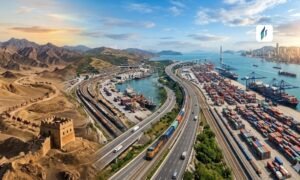
Once just dusty trails under merchant carts, today’s trade corridors have grown into complex systems linking ships, trucks, trains, and digital flows. Not simply concrete or steel, they move products, information, and money across continents in tight coordination. When deliveries must arrive exactly on schedule, the speed of these pathways shapes national economies more than ever before. Merging physical structures with smart rules at borders cuts expenses for companies while building deeper ties between countries. To see how goods keep flowing around the planet – and why cities thrive – watching these lifelines work reveals the hidden pulse beneath global markets.
The Physical Networks Linking Regions Across Continents
What keeps a trade route working isn’t just steel and concrete, yet something deeper – structures built tough enough for constant pounding by massive loads. Think docks carved into oceanside bedrock, rail lines thick with traffic, roads stretched wide to swallow endless truck convoys moving boxes nonstop. Yet strength alone fails without brains woven in beside it. Today’s paths pulse with data, sensors watching each crate’s journey minute by minute so problems show up early, shifts happen before gridlock forms. A delay detected at noon might already be dodged by sunset. This digital layer breathes life into flat pavement, making it shift with changing markets. Where such connections take root, distant players start flowing in, drawn by fresh opportunities. Once-cut-off spots begin humming – not overnight, but through steady pulses of exchange. Boundaries blur when signals move freely across stone and steel.
Economic Transformation Through Regional Integration
The implementation of a trade corridor often acts as a catalyst for profound economic shifts within the participating territories. By lowering transportation costs, these routes allow local manufacturers to compete on a global scale, providing them with access to raw materials and consumer markets that were previously out of reach. Beyond the immediate logistical benefits, these corridors encourage the development of Special Economic Zones and industrial clusters along their path. This phenomenon creates a “ribbon effect” where investment follows the infrastructure, leading to job creation and urban development in previously neglected regions. Furthermore, the collaborative nature of a trade corridor requires neighboring countries to harmonize their customs procedures and trade policies, which often leads to broader diplomatic stability and shared prosperity.
Overcoming Regulatory and Geopolitical Hurdles
Building a functional trade corridor is rarely a straightforward engineering task; it is frequently a complex diplomatic puzzle. One of the primary challenges lies in the “soft infrastructure”—the laws, treaties, and bureaucratic processes that govern the movement of goods. Even the most advanced railway is useless if cargo is delayed for weeks at a border due to inconsistent paperwork or protectionist tariffs. Therefore, the long-term viability of any trade corridor depends on the willingness of sovereign states to align their regulatory environments. Geopolitical tensions can also pose significant risks, as reliance on a specific route makes a nation’s supply chain vulnerable to political shifts. Diversifying these routes and ensuring multi-lateral oversight are critical strategies for maintaining the flow of commerce even during times of international friction.
Sustainable Practices and the Future of Logistics
As the world pivots toward a greener economy, the traditional model of the trade corridor is undergoing a necessary transformation. The environmental impact of massive logistical networks—ranging from carbon emissions to habitat disruption—cannot be ignored. Future developments are increasingly focusing on “green corridors” that prioritize electrified rail and hydrogen-powered shipping. By concentrating freight movement into highly efficient, high-volume channels, a modern trade corridor can actually reduce the total carbon footprint of global commerce compared to fragmented, inefficient shipping methods. Innovations in automation and artificial intelligence are also set to play a pivotal role, optimizing routes to minimize fuel consumption and waste. This evolution ensures that global trade remains not only economically viable but also environmentally responsible for generations to come.
Moving Beyond the Traditional Horizon
The path forward for global logistics lies in the refinement and expansion of these vital networks. Rather than viewing them as static assets, the global community must see each trade corridor as a living ecosystem that requires constant maintenance, technological upgrades, and diplomatic nurturing. As emerging markets in Africa, Southeast Asia, and South America continue to rise, the creation of new corridors will be the defining factor in their integration into the global value chain. The success of these initiatives will depend on a holistic approach that balances commercial speed with social equity and environmental stewardship. By investing in the physical and digital bridges between nations, we ensure a more resilient and inclusive global economy that can weather the uncertainties of the twenty-first century and beyond.
Read Also: The Evolution Of Glenn Phillips In International Cricket And T20 Leagues Worldwide